TECNALIA successfully validates EMS tool in the Portuguese Pilot and advances to real-world deployment in Poland
TECNALIA has successfully completed the validation phase of its Energy Management System (EMS) tool, FLEXY®, at the Portuguese Pilot in the Port of Sines.
Based on simulations, but using real-world data, the process validated the tool's two core functionalities:
• Price-based optimization: Determines the optimal operation schedules for flexible resources to minimize energy costs while ensuring technical constraints of the assets and end-user comfort preferences are strictly met.
• Market-based optimization: Defines bidding strategies for aggregators of flexible energy resources to participate jointly in the Day-Ahead (DA) and manual Frequency Restoration Reserve (mFRR) markets.
To enable these tests, the EMS was integrated with the ELEXIA data lake—a centralized hub facilitating information exchange between all project tools. For the Portuguese Pilot, FLEXY® utilized weather, demand, and renewable generation forecasts provided by ENFOR, as well as electricity market prices forecast (DA and mFRR) provided by DTU.
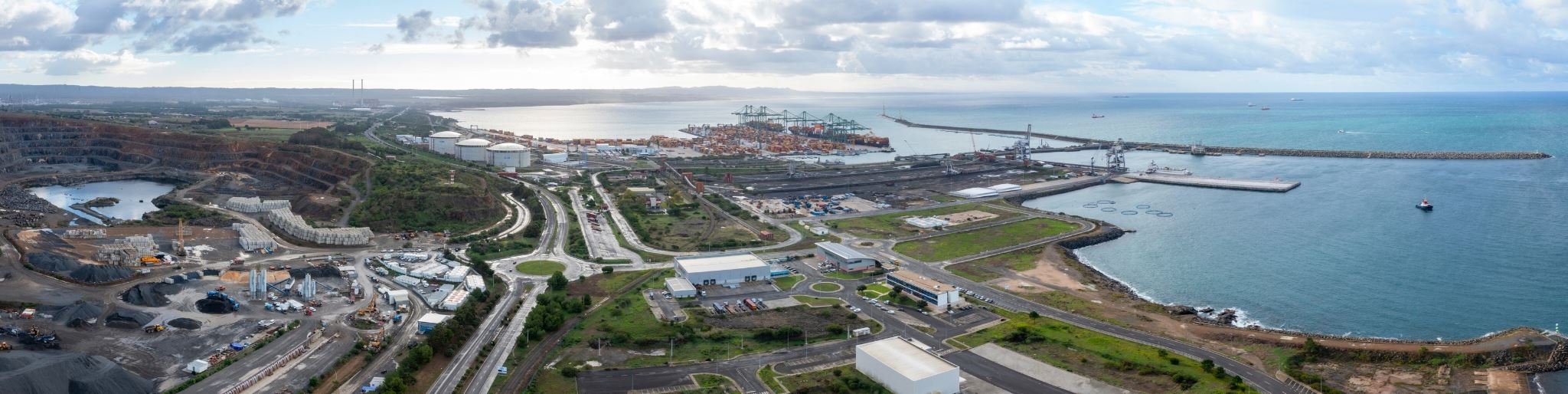
Port of Sines, Portugal
The price-based optimization functionality was tested across three distinct use cases, ranging from commercial loads to large-scale industrial plants, demonstrating significant benefits. The preliminary results for a random day in March 2026 showed that office buildings achieved savings in the range of 10 % by optimizing Heat Ventilation and Air-conditioning systems (HVACs), Electric Vehicles (EVs), and Photovoltaic (PV) systems; industrial cooling warehouse (ICW) saw reductions between 5 % and 20 % depending on the tariff; and the Liquified Natural Gas (LNG) plant achieved a 3.5 % daily cost reduction, translating to approximately EUR 500 in daily savings.
Also very promising were the results of the market-based optimization functionality,which aggregated all flexibility resources from the previous cases. While exclusive participation in the Day-Ahead (DA) market reduced costs by nearly 10 %, combining the DA and mFRR markets led to a 50 % reduction in overall costs compared to the non-optimized baseline (in an ideal situation for the considered day).
Results have demonstrated that the EMS tool provides a clear efficiency gain, delivering measurable savings across all scenarios when compared to the baseline (non-optimized) operations. Full technical description of the EMS and tests results will be available soon in the deliverable D3.1 of the ELEXIA project.
The project is now advancing to the validation phase in Poland. This demonstration requires the coordinated integration of several ELEXIA tools and Partners, including forecasting systems from ENFOR and DTU, the data lake developed by Center Denmark with AMC-TECH leading the integration of flexible resources and tools into the aforementioned data lake.
This stage represents a significant scale-up, as the tool will be deployed in a live industrial setting at Promet Plast, a leader in advanced plastic processing and the production of high-quality components for the health-care sector. The Polish pilot currently focuses on optimizing a complex energy mix, including industrial-scale photovoltaic and wind power, along with battery energy storage. Future implementation stages will integrate additional flexibility resources from the Promet Plast facilities, such as trigeneration, the electrolyzer, and a gravity storage (currently under construction), while also incorporating the factory's overall electricity consumption into the optimizations. Integration with the facility's control systems via the data lake is already underway, and preliminary off-line assessments are being conducted to estimate potential savings of the EMS.
The validation in Poland represents a very interesting opportunity to confirm the promising simulation outcomes through real-world application.